 Skip to content

What to check before reserving a property or signing a deposit contract: what you should never overlook

You have found the house. You like it. The price fits. And then comes one of the phrases that puts the most pressure on buyers: "There are other interested parties. If you want it, you have to reserve it now." In today's market, this situation is not unusual. Information recently published by El País specifically highlights the increase in express property transactions. According to data cited in the article, in certain real estate networks between 20% and 30% of transactions are committed by paying a deposit after the first viewing. The problem is not making a quick decision. The problem is making it without really knowing what you are buying. Because a home is not just four walls, a kitchen you like, and some lovely views. It may have liens, pending community fees, urban planning issues, discrepancies in area, tenants, debts with the community, deteriorated installations, or even renovations that are not legally registered as they should be. Discovering this after handing over €10,000, €20,000 or €30,000 can turn your dream purchase into a problem. Reserving quickly does not mean reserving blindly There is one idea that is important to be very clear about: you can act quickly and at the same time check the essentials. Many of the fundamental checks can be carried out swiftly if you know what documentation to request and have appropriate advice. What you should not do is hand over a significant amount of money simply because someone says: "If you don’t sign today, it probably won't be available tomorrow." Commercial pressure should never replace information. In fact, Spanish legislation expressly recognises the buyer’s right to have certain information before formalising the transaction and before paying any deposit. Article 31 of Law 12/2023 on the right to housing allows the interested party to request information about the owner, the price, the property's features, its registration status, liens, area, habitability, energy efficiency, occupation and other relevant aspects. And something especially important: real estate agents and other professionals involved have a duty to provide complete, objective, truthful, clear and understandable information. Therefore, asking questions before reserving is not being distrustful. It is buying correctly. Minimum checks before handing over money Before signing a reservation or deposit agreement, these are the checks we consider particularly important: Watch out for community fees and debts This point deserves special attention. The Horizontal Property Law establishes that when a property is sold, the seller must declare whether they are up to date with community charges and provide a certificate of debt in the deed, unless the buyer expressly exempts them from doing so. But waiting until the day at the notary is too late to discover some problems. Before signing a deposit agreement, it is wise to find out if there are any significant approved or foreseeable community charges. Imagine you buy an apartment and weeks later discover that the community has approved a refurbishment of the facade, roof or elevator amounting to €12,000 per owner. Probably, that information would have influenced the price you were willing to pay. That is why it is highly recommended to also request recent information from the community and, when relevant, review the latest minutes. Royal Decree 515/1989, applicable to offers and sales made in a business or professional activity directed at consumers and with the peculiarities of regional regulations, additionally includes information on the community statutes and, when operational, an extract of the accounts and obligations corresponding to the property. What information can you demand before reserving? There is considerable lack of knowledge here. The Law on the right to housing establishes that the interested party may request information before formalising the transaction and before paying any deposit regarding numerous aspects of the property. These include the identity of the seller and the professional intermediary, the total price, usable and built area, age, relevant renovations, installations, energy certificate, accessibility, occupation status, registration identification, liens, and certain urban or administrative aspects. Furthermore, when a professional real estate agency is involved, the law imposes a general duty to provide complete, objective, truthful, clear, understandable and accessible information. This does not mean any agency must automatically give you twenty documents just for crossing the door. It means something much more important: you should not be required to pay money blindly. And you can request the necessary information before committing financially. Regional regulations may also establish additional obligations. Reservation and deposits are not just a formality Another common mistake is thinking: "I’ll reserve now and review everything later." Careful. Depending on how the document is drafted, the amounts paid and the clauses agreed, signing can have significant financial consequences if you subsequently decide not to buy. That is why a reservation or deposit should never be signed without fully understanding what happens if the transaction ultimately does not proceed. Especially if you need mortgage financing. If the purchase necessarily depends on obtaining a mortgage, it is advisable to study feasibility beforehand and ensure the contract properly covers this circumstance. At Hipotea we strongly emphasise this point: first check how much you can buy, then look for the property. Not the other way round. Check how much you can buy with our mortgage feasibility calculator. The property may be perfect… but the building may not During a viewing, we usually focus on the kitchen, bedrooms, orientation, light, terrace or layout. But buying an apartment also means buying a proportional part of the roof, facade, elevators, structure, communal facilities and other common elements. That is why the condition of the building matters almost as much as the condition of the apartment. An old kitchen you can probably change whenever you want. An extraordinary community charge of €15,000 to refurbish the facade can arise at the least convenient time. This is one of the reasons why express transactions involve special risk. The information recently published precisely includes warnings from technicians and lawyers about buyers committing without sufficiently analysing the
Deposit agreement: what you should check before signing to avoid losing thousands of euros

Buying a home is one of the most important financial decisions in our lives. However, many people make a costly mistake: signing a deposit contract without having reviewed all the important aspects of the transaction. It's common to be swept away by the excitement of finding the perfect house. The fear of another buyer getting ahead often causes people to hand over a deposit quickly, without analysing whether they can actually afford to buy that property. At Hipotea, we frequently see cases where people have paid thousands of euros as a deposit, only to discover weeks later that the mortgage has fallen through or there are unknown issues with the property. The good news is that many of these problems can be avoided if you review certain aspects before signing. What is a deposit contract? A deposit contract is a private agreement between buyer and seller whereby both parties commit to completing the purchase of a property within a specified timeframe. Typically, the buyer pays a deposit amount, which is later deducted from the final price when the sale is formalised. Although it is a common document, it should not be signed lightly, as it can have significant financial consequences if either party breaches the agreement. What happens if you breach the contract? In many sales, so-called penal deposit clauses are used, regulated under Article 1454 of the Civil Code. In such cases: This is why it is essential to verify exactly what kind of deposit the contract establishes and what its consequences are before signing. Precisely for this reason, reviewing the entire transaction before handing over money can save you headaches later. The 7 aspects you should check before signing a deposit agreement 1. Confirm that you can actually obtain the mortgage This is probably one of the most common mistakes. Many people look for a home, find their ideal house, and sign a deposit contract assuming the bank will approve their financing. But the reality is that until lenders assess your profile and the transaction, you cannot assume you will get the mortgage. Before handing over a deposit, it’s crucial to know: At Hipotea, you can make a preliminary check using our Mortgage Viability Calculator, a free tool that helps you see if your profile initially fits the criteria most financial institutions consider. 👉 Check my mortgage viability 2. Ensure the property price fits your budget Finding a home you like doesn’t automatically mean you can afford it. Beyond the purchase price, you must also consider taxes and other transaction costs, as well as the savings you might need to contribute. Before signing the deposit contract, it’s advisable to know the maximum price you can afford without jeopardising your finances. To make a first estimate, you can use our Maximum Price Calculator, which helps you gauge approximately what property price fits your financial situation. 👉 Calculate the maximum home price I can afford 3. Request an official land registry extract and check if the property has encumbrances Before handing over any money, it’s advisable to check the registration status of the property. The land registry extract provides important information such as: Spotting any such issues before signing can prevent delays and problems later. 4. Verify what documentation the property has Before committing to the purchase, request and review the relevant documentation of the property. Depending on the property and transaction, it may be crucial to check documents like: It might also be wise to verify the urban planning status and any other relevant documents depending on the specific characteristics of the property. The more information you have before signing, the fewer surprises you’re likely to encounter during the process. 5. Check the contract deadlines The deposit contract usually sets a deadline to formalise the purchase. This deadline should be realistic. A mortgage process may take several weeks to complete. The lender will need to study the documentation, perform due diligence, and usually arrange a valuation of the property before proceeding with the legal steps needed to sign. Therefore, accepting an overly tight deadline can cause problems, especially if your purchase depends on bank financing. 6. Clarify what happens if the mortgage is not approved This point is especially important. Many people assume that if the bank ultimately refuses the mortgage, they will automatically get their deposit back. This need not be the case. The outcome will depend on the contract’s content and the terms agreed between buyer and seller. Therefore, when the purchase depends on obtaining financing, it is important to carefully draft a clause related to financing approval and its consequences. This way, both parties can know beforehand what will happen if the mortgage is not obtained under the expected conditions. If you’re planning to buy your first home and require a high percentage of financing, you can also check our article on the ICO Guarantee 2026, where we explain the conditions and the importance of pre-assessing mortgage viability. 👉 Understand the new requirements of ICO Guarantee 2026 7. Calculate the mortgage monthly payment before committing Getting mortgage approval is only part of the decision. You also need to ensure that the monthly payment fits within your budget and that you can comfortably afford it. Before signing a deposit contract, you can use our Mortgage Payment Calculator to estimate monthly payments based on factors such as: 👉 Calculate my mortgage payment Knowing this information before committing to a property will help you make a much more informed decision. Mistakes to avoid before signing a deposit contract In summary, here are some of the mistakes you should try to avoid: Reviewing these points can save you financial troubles and give you much more peace of mind throughout the buying process. Checklist before
The mistake many make when signing a mortgage that could cost you thousands of euros

When someone signs a mortgage, they usually focus on a single question: what interest rate will I pay? And that is completely normal. A lower interest rate can mean significant savings over the years. However, there is a key aspect that many people overlook and that can also significantly affect their finances: the conditions for repaying or cancelling the mortgage early. It’s not all about the interest rate Comparing interest rates across different offers is essential, but it should not be the only factor to consider. Mortgages include various conditions that can make a big difference if in the future you decide to: In all these cases, there may be fees that you should know about before signing. What is an early repayment fee? Early repayment consists of paying back part or all of the loan before the agreed term. Reducing debt is usually a smart strategy, as it lowers the total interest you will pay over the life of the mortgage. However, some lenders charge a fee for doing this. Although current legislation limits these fees and many lenders now offer mortgages without early repayment charges, it remains a crucial point you should check before making a decision. What if you find a better mortgage in a few years? The mortgage market is constantly evolving. It is possible that in a few years better offers will appear than the one you initially signed. At that time, you might consider changing your mortgage to another lender through a subrogation. If your loan includes certain fees, this change might not be as financially advantageous as you expected. That’s why it’s important not only to focus on what you will pay today but also on the flexibility you will have in the future. Aspects you should review before signing Before accepting any mortgage offer, it is advisable to analyse in detail: A thorough review can help you avoid unnecessary costs in the long term. A mortgage is a long-term decision Signing a mortgage is committing to an obligation that may accompany you for decades. Therefore, beyond getting a good interest rate, it is essential to understand all the contract conditions and choose financing that gives you flexibility to adapt to any changes that may arise over time. Taking the time to compare options and resolve doubts before signing can make a significant financial difference. Are you thinking of buying a home? At Hipotea, we analyse your situation in a personalised way and compare multiple lenders to help you find the mortgage that best suits you. We explain every condition with total transparency so you can make an informed decision without surprises.
What influences a property valuation the most?

The 10 Factors That Can Increase or Decrease a House's Valuation When You Apply for a Mortgage When someone buys a home, they usually focus on very personal aspects: renovations, the terrace, the views, the number of bedrooms, the area, the layout, or simply the feeling the property gives upon entering. And that is perfectly normal. Each buyer values some things more than others. But if you are purchasing with a mortgage, there is one reality you must be very clear about: the bank does not only consider the price you agree with the seller. It also takes into account the value that a valuer can justify. That difference can be decisive. You might think a property is worth a certain price because you like it, because there is limited supply, or because the seller refuses to negotiate. However, to grant a mortgage, the financial institution requires a valuation carried out according to technical and regulatory criteria. And if the valuation comes in below the purchase price, the transaction may become complicated. In this article, we explain which factors most influence the valuation of a home, why some weigh more than others, and what you should review before reserving a property. What Is a Mortgage Valuation? A mortgage valuation is a technical appraisal of the property used to determine its value as collateral for a mortgage loan. It is not the buyer’s opinion. It is not the price the seller is asking. It is not simply what is listed on a property portal. Nor is it just 'what is being paid in the area.' The valuation must technically justify the property's value considering its characteristics, documentation, condition, location, and comparable market. Applicable Regulations: Order ECO/805/2003 and Order ECM/599/2025 In Spain, mortgage valuations are conducted in accordance with Order ECO/805/2003, of 27 March, which regulates property valuation standards and certain rights for specific financial purposes. This regulation was amended by Order ECM/599/2025, dated 10 June, published in the Official State Gazette (BOE) on 12 June 2025 and effective from 12 August 2025. The 2025 reform strengthens key aspects such as the documentation used by the valuer, traceability of comparables, surface area justification, energy efficiency certification, and the principle of sustainability. Important: The regulation does not publish an official ranking of factors from 10 to 1. What it does establish is what the valuer must review and justify. Therefore, this article’s ranking is a practical ordering based on the criteria that usually have the greatest influence in a housing mortgage valuation. Key Idea A valuation does not depend solely on the condition of the home. It depends on its size, building, location, documentation, and what the comparable market allows to be justified. Ranking: The 10 Factors That Most Influence a Home Valuation 10. Energy: Energy Efficiency, Insulation, and Consumption Energy efficiency is increasingly important in a property's valuation. The energy certificate, insulation, type of windows, heating and cooling systems, estimated consumption, and emissions can influence the perception and value of the property. Furthermore, with the 2025 regulatory update, the energy efficiency certificate gains increased relevance as documentation within the valuation process. However, in a standard property, energy still typically weighs less than other factors such as location, size, building, or market comparables. Hence it is number 10: it matters more and more, but it is usually not the factor that determines the final value the most. 9. Condition and Renovation The condition of the property clearly influences the valuation. A renovated, well-maintained home with updated installations, good bathrooms, modern kitchen, efficient windows, and materials in good condition can be valued higher than a similar property that needs a full renovation. But there is a very common mistake: thinking that all money spent on renovation is automatically recovered in the valuation. This does not always happen. The valuer does not only assess the cost of the work but the value that improvement adds to the property within its market. Renovations add value but do not replace stronger factors such as location, size, or comparable market. 8. Floor Level The floor level also has an influence, but not always in the same way. A high floor with a lift is usually valued better because it generally has more light, better views, less street noise, and more privacy. But if the building has no lift, the floor level can significantly penalise the valuation. It is not the same to be on the first floor without a lift as on the fourth floor without one. Ground floor properties may be penalised for less privacy, less light, more noise, or a greater sense of insecurity, although in some cases a courtyard or separate access can compensate for some of that disadvantage. 7. Light and Views Orientation, natural light, whether the property is interior or exterior, and its views can substantially influence the valuation. A bright home usually has better perception, better habitability, and greater commercial appeal. Good views can make significant differences: sea, park, square, mountain, historic area, or unobstructed views. However, views do not carry the same weight in every property. In a beach property, a penthouse or premium home, they can be very significant. In other cases, they contribute but usually do not outweigh size, location, or comparables. 6. Extras: Garage, Storage Room, Terrace, Courtyard, Pool, or Common Areas Extras can make a clear difference. Garage, storage room, terrace, courtyard, pool, garden, or common areas can increase a property's appeal. The key lies in whether these extras are scarce or not in that area. A garage can be very valuable in the centre of a city where parking is difficult. A terrace can have considerable weight in neighbourhoods where very few properties have outdoor space. Therefore, extras are not valued in isolation: they are assessed within the specific market of the property. 5. Layout:
Are you going to inherit or receive a property? Everything you should consider before deciding

Inheriting or receiving a property as a gift is more common than it may seem and often occurs without prior planning. At first glance, it may appear to be a clear advantage. But the reality is: Making a poor decision at this stage can have consequences for years to come. What inheriting or receiving a property really involves As highlighted in recent analyses by El País, inheriting a property is neither an automatic nor free process. When receiving a property, several key factors come into play: That is, it is not just about “receiving” but properly managing what has been received. Taxes: the first critical point One of the most important aspects is the fiscal impact. When inheriting or receiving a property, you usually have to face: Inheritance or Gift Tax It depends on: In some autonomous communities it may be heavily subsidised, while in others the cost can be significant. Municipal Capital Gains Tax Paid on the increase in value of urban land, even if the property has not been sold. Income Tax (in certain cases) This can apply in situations such as gifts or in future transfers of the property. The key point many people overlook Liquidity is not always available to cover these taxes. This generates a very common situation: What you can do with the inherited property Once the initial stage is overcome, the most important decision arises: what to do with the asset. The most common options are: Keep the property for personal use It is an emotional decision, but should be analysed from a practical standpoint: Rent it out This can generate income but implies: Sell the property It allows liquidity but you must consider: Renovate before deciding In many cases, improving the property can: Where financing fits in, even if you already have a home There is a belief that when inheriting a property there is no need for financing. However, in practice this is not always the case. Situations where financing could be necessary Even if you own a property, you may need financing in the following cases: In the latter case, the inherited property may be used as collateral in a mortgage transaction. Important: each decision has a different impact It is not the same: Each of these options has different consequences on the estate and financial situation in the medium to long term. Common mistake in these cases One of the most frequent errors is making decisions without prior analysis: In many cases, decisions are made hastily and not from a strategy. Conclusion Inheriting or receiving a property is not only an opportunity. It is also a key moment that requires analysis and planning. Good management can significantly improve financial standing, while a poor decision may limit future options.
How age influences your mortgage: maximum term, monthly payment, and financing you can obtain

Cómo influye la edad en la hipoteca: plazo máximo, cuota mensual y financiación que puedes conseguir Cuando alguien piensa en cómo influye la edad en la hipoteca, suele llegar rápidamente a esta conclusión: cuantos más años tengas, menos plazo te dará el banco. Y, en esencia, eso es cierto. Pero lo verdaderamente importante no es solo el plazo que te concedan, sino cómo ese plazo cambia la cuota mensual que vas a pagar. Porque una diferencia de años puede suponer varios cientos de euros más o menos cada mes. Por eso, antes de obsesionarte con firmar la hipoteca al menor plazo posible, conviene entender algo mucho más útil: lo importante no es solo el plazo, sino conseguir una cuota que encaje con la vivienda que quieres comprar y con tu economía mensual. Además, aquí es donde empieza la parte que mucha gente desconoce: tu edad no es el único factor que influye en el plazo hipotecario. También importan la entidad en la que lo solicites, el tipo de hipoteca, si compras solo o con otra persona e incluso cuál de los titulares tiene mayores ingresos. En este artículo te explicamos de forma clara y sencilla cómo influye tu edad en la hipoteca, qué plazos máximos puedes aspirar a conseguir y por qué elegir bien la entidad puede cambiar por completo el resultado final. El plazo cambia muchísimo la cuota mensual Vamos a verlo con un ejemplo muy claro. Si contratas una hipoteca de 250.000 euros al 2,5%, la cuota mensual cambiaría aproximadamente así: Entre pagar esa hipoteca a 20 años o a 40 años hay una diferencia de unos 500 euros al mes, es decir, alrededor de un 38% menos de cuota mensual. Y eso cambia por completo una operación. Porque una cuota más baja puede darte más margen, más tranquilidad y, en muchos casos, incluso permitirte aspirar a una vivienda mejor. Es verdad que, si mantuvieras la hipoteca hasta el último día, un plazo más largo implicaría pagar más intereses. Pero aquí hay un matiz fundamental que muchas personas pasan por alto: en España las hipotecas suelen cancelarse antes de agotar su plazo inicial, habitualmente entre los 10 y los 15 años. ¿Y por qué ocurre esto? Principalmente por cuatro motivos muy frecuentes: Por eso, al elegir plazo, no conviene pensar solo en los intereses teóricos que pagarías si mantuvieras esa hipoteca intacta durante 30 o 40 años. En la práctica, muchas operaciones no llegan hasta ese final. Y precisamente por eso, tener una cuota más flexible desde el principio puede ser una decisión mucho más inteligente que obsesionarse con acortar plazo solo para pagar menos intereses sobre el papel. Antes de pensar en años, piensa en cuota Este es uno de los errores más frecuentes al buscar hipoteca: centrarse solo en si son 25, 30 o 35 años, sin analizar bien qué cuota mensual supone cada escenario. La pregunta no debería ser solo: “¿A cuántos años me la pueden dar?” La pregunta realmente importante es: “¿Qué cuota me permite comprar la vivienda que quiero sin ahogarme cada mes?” Porque una hipoteca no debe diseñarse para que quede bonita en una simulación. Debe diseñarse para que puedas vivirla con comodidad. El plazo medio de constitución en España ronda los 25 años En España, el plazo medio de las hipotecas constituidas sobre vivienda se sitúa en torno a 25 años, según los últimos datos del INE. En la nota publicada en marzo de 2026 para las hipotecas sobre viviendas, el plazo medio volvió a situarse en esos 25 años. Ahora bien, ese dato es solo una media estadística. No significa que 25 años sea el plazo ideal para todo el mundo. Hay compradores para los que tendrá sentido ir a 20 o 25 años. Y otros para los que lo más inteligente será irse a 30, 35 o incluso 40 años si eso les permite ajustar mejor la cuota. Por tanto, el plazo medio sirve como referencia general, pero la mejor hipoteca no se decide por la media del mercado, sino por tu caso concreto. La regla habitual de los bancos: edad + plazo En muchas entidades existe una referencia bastante extendida: edad del titular + plazo hipotecario = 75 años Además, muchas veces esa regla convive con otro límite adicional: un máximo de 30 años de plazo en hipotecas estándar. Esto significa que, aunque por edad pudieras llegar a un determinado plazo, puede que la entidad igualmente no te permita superar ese tope general. Por ejemplo, una persona con 45 años podría pensar que puede llegar a 30 años de hipoteca porque 45 + 30 = 75. Pero si la entidad tiene una política más conservadora o limita comercialmente sus productos, el plazo real puede ser inferior. No todos los bancos aplican el mismo límite de edad Aunque el estándar de mercado suele moverse en torno al criterio de edad + plazo = 75 años, la realidad es que no todas las entidades fijan el mismo tope. Algunas son más restrictivas y reducen ese límite hasta los 70 años, mientras que otras lo amplían hasta los 80 años, aunque estas últimas son minoría. Además, no basta con mirar solo ese límite final de edad: hay bancos que, aun llegando a una determinada edad máxima, mantienen un tope general de 30 años de plazo, mientras que otros permiten alcanzar 40 años en productos concretos, especialmente en hipotecas jóvenes o determinadas modalidades variables o mixtas. Bankinter, por ejemplo, publicita hasta 40 años en su hipoteca joven variable y hasta 30 años en su hipoteca fija general. Por eso, dos personas con perfiles muy parecidos pueden acabar obteniendo plazos máximos muy distintos según la entidad en la que tramiten la operación. Y este punto es clave: la edad influye, sí, pero igual de importante es saber en qué entidad pedir la hipoteca. Las hipotecas jóvenes pueden romper la norma general Aquí aparece una de las grandes excepciones del mercado. Hay entidades que, para sus hipotecas estándar, aplican límites más conservadores, pero
How to know if a mortgage is good in 2026: the 5 key points you must consider before signing

Elegir una hipoteca no consiste solo en encontrar el tipo de interés más bajo. En 2026, con un mercado hipotecario más competitivo, digitalizado y cambiante, una hipoteca “barata” puede acabar siendo muy cara si no se analizan bien todos los factores. En este artículo te explicamos las 5 claves para saber si una hipoteca es realmente buena, ordenadas de menor a mayor importancia, para que entiendas qué pesa poco, qué pesa mucho… y qué es lo verdaderamente decisivo antes de firmar. 5 El banco: lo menos importante (aunque muchos creen lo contrario) Durante años se ha elegido hipoteca por: La realidad hoy es muy distinta. Una vez firmas: Lo que sí importa es: Conclusión: el banco importa, pero es el factor menos determinante. 4 Tipo de préstamo: fija, variable o mixta Elegir entre hipoteca fija, variable o mixta es relevante, pero no es una decisión irreversible como lo era hace años. Hoy en día: Cada tipo tiene ventajas y riesgos, pero equivocarse ya no es tan dramático como antes. Conclusión: es importante elegir bien, pero no debe paralizarte. 3 Tipo de interés (TIN): importante, pero no decisivo El tipo de interés sigue siendo uno de los datos más llamativos, pero no es el más importante. ¿Por qué? Dos hipotecas con el mismo TIN pueden tener costes finales muy diferentes. Conclusión: el interés importa, pero no debe ser el criterio principal. 2 Vinculaciones: donde muchas hipotecas se encarecen Aquí es donde empiezan los problemas reales. Muchas hipotecas reducen el interés a cambio de contratar: El problema no es tener vinculaciones, sino su coste acumulado durante 20 o 30 años. Una hipoteca con buen interés puede acabar siendo muy cara si te obliga a contratar productos que no necesitas. Conclusión: las vinculaciones deben cubrir tus necesidades, no engordar el coste. 1 La TAE: lo más importante para saber si una hipoteca es buena Si hay un dato que resume si una hipoteca es buena o no, es la TAE (Tasa Anual Equivalente). La TAE incluye: Es el único indicador que permite comparar hipotecas de verdad, en igualdad de condiciones. Por eso, una hipoteca con un TIN más alto puede ser mejor que otra con un TIN más bajo si su TAE es inferior. Según las recomendaciones del Banco de España, el consumidor debe fijarse siempre en el coste total del préstamo, no solo en el tipo nominal. Conclusión final: una hipoteca es buena si su TAE es competitiva y sostenible a largo plazo. Entonces… ¿cómo saber si una hipoteca es realmente buena? Una buena hipoteca es la que: No existe “la mejor hipoteca del mercado”, sino la mejor hipoteca para cada persona.
Don't be fooled: this is the trick that makes a mortgage at 1.70% end up costing 4.30%.

Cuando buscas hipoteca, casi todos hacemos lo mismo:miramos el tipo de interés y elegimos el más bajo. El problema es que ese número que ves en grande —el famoso 1,70%, 1,80% o “desde”— no siempre refleja lo que vas a pagar realmente. La diferencia entre una hipoteca “barata” y una muy cara suele estar en algo que muchos pasan por alto: el salto del TIN a la TAE. Empecemos por lo básico: ¿qué es el TIN? El TIN (Tipo de Interés Nominal) es el interés que el banco aplica al dinero que te presta. Dicho de forma sencilla: Pero el TIN no incluye muchos costes que sí vas a pagar. Por eso, fijarte solo en él puede llevarte a una conclusión equivocada. Entonces, ¿qué es la TAE? La TAE (Tasa Anual Equivalente) intenta reflejar el coste real de la hipoteca. Además del TIN, tiene en cuenta: Por eso, cuando se comparan hipotecas, la TAE es el dato clave. El gran salto: cuando un TIN bajo se convierte en una TAE muy alta Aquí es donde está el “truco” que muchos no ven. Ejemplo realista (y muy habitual) Imagina esta oferta: Hasta aquí, todo parece excelente. Pero para mantener ese 1,70%, el banco exige: Cuando se suma el coste real de todos esos productos… ➡️ TAE final: 4,30% El interés anunciado es del 1,70%,pero el coste real de la hipoteca se más que duplica. Otro ejemplo: misma hipoteca, sin tantas ataduras Ahora veamos una alternativa: ➡️ TAE final: 2,60% Aunque el TIN es más alto,la hipoteca es mucho más barata en términos reales. Por qué pasa esto (y por qué no siempre se explica bien) Las vinculaciones: El problema es que: El error más común al comparar hipotecas Comparar solo esto: Y elegir la primera. Ese error puede significar: Qué deberías hacer siempre antes de firmar Antes de decidirte por una hipoteca, conviene analizar: Este análisis completo no suele aparecer en los anuncios, pero es el que realmente importa. No es desconfianza, es información No se trata de pensar que “te quieren engañar”,sino de entender que una hipoteca es un producto complejo. El TIN llama la atención.La TAE cuenta la verdad. Y solo cuando entiendes la diferencia puedes tomar una buena decisión. Por eso, en Hipotea no nos limitamos a negociar por ti un buen tipo de interés.Analizamos y negociamos todas las vinculaciones, una a una, valorando su coste real y si de verdad te compensan a lo largo del tiempo. Porque una hipoteca no es solo el interés que firmas hoy,sino todo lo que vas a pagar durante los próximos 20 o 30 años.
Cadastre vs Registry: When data don’t match and how this can affect your mortgage
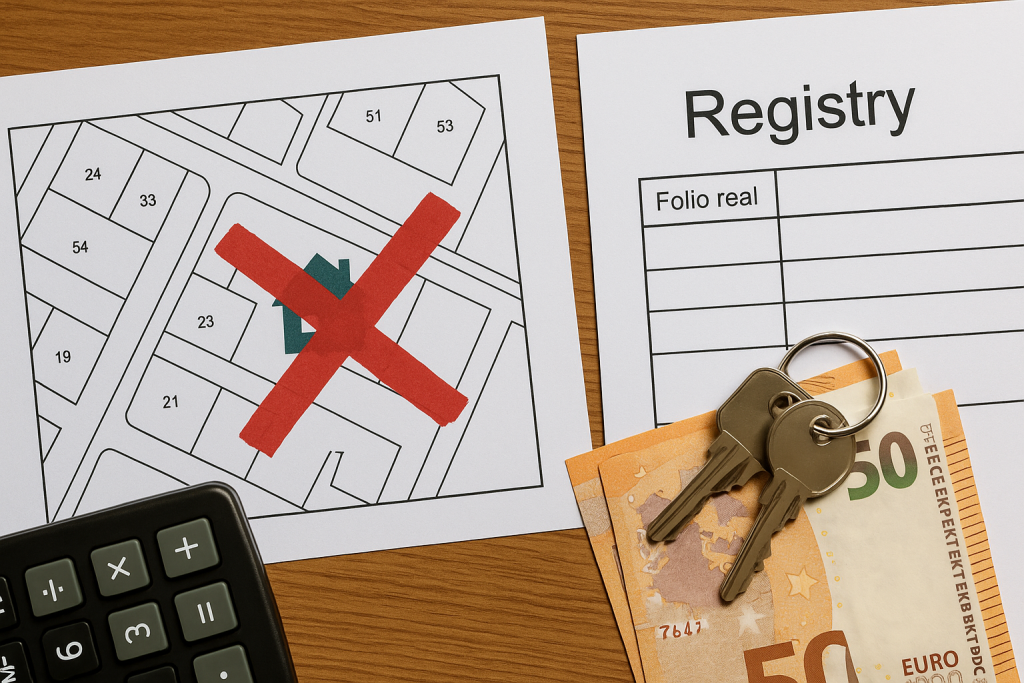
En el proceso de compra de una vivienda con financiación hipotecaria hay un detalle que muchos pasan por alto y que, sin embargo, puede retrasar, bloquear o incluso impedir que un banco conceda la operación: que los datos del Catastro y del Registro de la Propiedad no coincidan. En Hipotea Asesores lo vemos cada vez con más frecuencia. Diferencias que parecen “sin importancia” —unos metros de más o de menos, una ampliación sin declarar, lindes mal definidos— pueden convertirse en un auténtico cuello de botella cuando el tasador o el banco revisan la vivienda. En este artículo te explicamos qué ocurre cuando Catastro y Registro no cuadran, por qué afecta a tu hipoteca y cómo evitar problemas antes de llegar a la firma. 1. ¿En qué consiste realmente el problema? Aunque muchas personas creen que Catastro y Registro son lo mismo, cumplen funciones totalmente distintas: Catastro Un registro administrativo y fiscal: recoge la superficie, uso, referencia catastral, ubicación, etc. Se utiliza principalmente para tributos como el IBI. Registro de la Propiedad El registro jurídico que determina quién es el dueño, qué cargas tiene el inmueble y qué es lo que legalmente existe. Este es el registro que el banco usa para evaluar la garantía de tu hipoteca. ¿Qué ocurre cuando no coinciden? Si la superficie inscrita no coincide con la del Catastro, si existen ampliaciones no declaradas, si la parcela tiene lindes distintos o la realidad física no se corresponde con lo inscrito…→ La tasación puede quedar comprometida → El banco puede frenar la operación → O directamente denegar la hipoteca Porque para el banco, la garantía debe ser clara y jurídicamente segura. ¿Por qué estas diferencias pueden bloquear una hipoteca? La Ley 5/2019 exige que el inmueble esté perfectamente identificado para poder constituir un préstamo hipotecario. Y la Ley 13/2015 obliga a que las fincas incorporen una representación gráfica georreferenciada, normalmente la del Catastro. Cuando esto no sucede, aparecen tres problemas graves: 1. La tasación puede quedar “condicionada” El tasador puede exigir documentación adicional, pedir una regularización o incluso no poder valorar la vivienda completa. Sin tasación válida → no hay hipoteca. 2. El banco puede considerar la finca como “no identificada” Si no coincide lo inscrito con lo que el tasador ve, la entidad puede frenar todo el expediente.Legalmente, la garantía debe estar clara al 100%. 3. Construcciones sin inscribir = riesgo legal Buhardillas, ampliaciones, porches cerrados, trasteros integrados, piscinas…Si no existen en el Registro: → no computan como garantía → bajan la tasación → limitan la financiación → pueden hacer inviable la operación Qué exige la normativa para arreglarlo Si hay diferencias relevantes entre Catastro y Registro, la ley marca un proceso para regularizarlo: Ley 13/2015 y Ley Hipotecaria (arts. 199 y 201) Pueden exigir: • levantamiento topográfico • representación gráfica georreferenciada • notificación a colindantes • coordinación Catastro–Registro • rectificación de cabida registral • expediente completo si la diferencia supera aprox. el 10% Esto implica tiempo, costes y trámites adicionales. Y mientras tanto, la hipoteca queda suspendida. El impacto real en la hipoteca (lo que pasa en la práctica) Desde la experiencia gestionando miles de hipotecas, estos son los efectos más habituales: – Tasación condicionada El banco no puede avanzar hasta que se solvente la discrepancia. – Retrasos que ponen en riesgo fechas de contrato Especialmente si hay señal entregada o compromiso notarial. – Costes inesperados Topógrafo, escritura de rectificación, actualización registral… – Operaciones que se caen Cuando la regularización no es viable o llevaría demasiado tiempo. – Sensación de inseguridad en el comprador Muchos clientes creen que “alguien les ha engañado”, cuando simplemente se trata de documentación antigua mal actualizada. Cómo evitar que esto arruine tu hipoteca (Proceso recomendado por Hipotea Asesores) Para minimizar riesgos, siempre recomendamos revisar la propiedad antes de iniciar el proceso con los bancos. Estos son los pasos clave: 1. Comprobación documental inicial Antes de firmar el contrato de arras: • Nota simple registral • Certificación catastral descriptiva y gráfica • Escrituras previas • Planos o croquis • Comprobación de superficie real vs inscrita 2. Identificación de discrepancias Si hay diferencias relevantes (>5–10%), pedir a la inmobiliaria o al vendedor cómo piensa solventarlo desde el principio. 3. Acompañamiento en la regularización Para corregir la discrepancia en algunos casos será necesario acudir a Topógrafos, arquitectos, abogados registrales… En Hipotea Asesores en caso de gestionar la hipoteca también nos encargamos de coordinar todo para que quede correcto. 4. Alternativas si no da tiempo Planteamos opciones viables para salvar la operación: • retraso pactado en contrato • firma parcial • cambio de banco más flexible • reestructuración de la tasación 5. Comunicación clara Exige te expliquen por qué ocurre, qué consecuencias tiene y qué soluciones existen. La transparencia tegenerará la confianza que necesitas en estos casos y evita tensiones en el proceso. 6. ¿Qué discrepancias son las que más preocupan a los bancos? • Superficie construida distinta • Anexos sin inscribir (buhardillas, porches, habitaciones) • Cambios de uso sin declarar • Construcciones antiguas no registradas • Parcelas con lindes conflictivos • Edificaciones fuera de ordenación Estas situaciones pueden llevar a tasación limitada o directamente no apta. 7. Conclusión: un problema silencioso, pero totalmente evitable Las diferencias entre Catastro y Registro no son un simple detalle técnico.Pueden ralentizar una compra, paralizar una hipoteca o encarecer una operación. La buena noticia es que, si se revisa a tiempo, la mayoría se solucionan sin grandes complicaciones. En Hipotea Asesores ofrecemos una revisión jurídico-catastral completa para que el comprador llegue a la firma con la tranquilidad de que nada se va a torcer en el último momento. Una buena hipoteca empieza siempre por una vivienda bien documentada.
Does paying a mortgage make you the owner of the house? The legal truth you need to know (and almost nobody explains)

En España existe una confusión muy extendida: pensar que pagar la hipoteca de una vivienda —total o parcialmente— te otorga derechos de propiedad sobre esa casa.Es una idea repetida en separaciones, divorcios, parejas de hecho e incluso cuando dos personas compran una vivienda juntas. Pero la realidad jurídica es muy distinta. En este artículo te explicamos de forma clara, práctica y sin tecnicismos qué ocurre realmente, qué dice la legislación española, qué derechos puedes reclamar si no eres propietario y qué puedes hacer para evitar problemas en el futuro. Propiedad y hipoteca no son lo mismo: la clave que debes entender El primer concepto importante es este: 👉 Ser titular de la hipoteca NO te convierte en propietario.👉 Y pagar la hipoteca NO te convierte en propietario. La propiedad de una vivienda en España solo la determina: ✔ La escritura de compraventa, y✔ Su inscripción en el Registro de la Propiedad. Por tanto, puedes pagar durante años…y aun así no ser dueño de nada si no apareces como propietario en el Registro. El caso más habitual: una pareja vive junta y paga una hipoteca que está solo a nombre de uno Este es, sin duda, el escenario más frecuente: Legalmente: 👉 La vivienda sigue siendo privativa del titular.👉 Pagar la hipoteca NO te hace dueño.👉 Y si la pareja se rompe, la otra persona puede quedarse sin la vivienda… aunque haya pagado años. Pero aquí es donde entra lo importante:no eres propietario, pero sí podrías tener derechos económicos si puedes demostrar aportaciones. Más abajo te explico exactamente cuáles. ¿Y si ambos pagamos la hipoteca, pero solo uno figura como propietario? Esta situación es muy delicada. Si también figuras como titular del préstamo Si NO figuras como titular del préstamo Entonces… ¿pagar una hipoteca genera algún derecho? No propiedad, pero sí derechos de crédito. Solo existen tres situaciones en las que tienes derecho a reclamar: 1- Cuando se pagaron cuotas con dinero ganancial Si estáis casados en régimen de gananciales y se paga la hipoteca de un bien privativo de uno: ✔ Existe derecho de restitución del dinero aportado.✔ Incluso se puede obtener participación proporcional en la vivienda (doctrina del Tribunal Supremo). Ejemplo real:Una vivienda era privativa del marido, pero durante el matrimonio se pagó la hipoteca con dinero ganancial.La mujer no se convierte en propietaria, pero sí tiene derecho económico sobre la parte amortizada. 2- Cuando sois pareja no casada y puedes demostrar aportaciones En parejas de hecho, noviazgos o convivencias sin régimen económico: Se basa en dos principios: Pero ojo: Reclamar porcentaje de propiedad solo es posible si se demuestra que: No es sencillo, pero sí posible. 3- Cuando hay acuerdo de divorcio o liquidación de bienes Si en una separación o divorcio se reconoce: entonces queda fijado por convenio regulador o sentencia. Es la vía más rápida, más clara y la menos conflictiva. Entonces… ¿cuál es la conclusión real? Muy simple: 👉 Pagar la hipoteca NO te convierte en propietario.👉 Pero sí te puede dar derecho a recuperar lo que aportaste… si puedes demostrarlo.👉 Y solo la inscripción en el Registro de la Propiedad determina quién es dueño. Nuestra recomendación: evita problemas desde el principio Si vais a vivir en una vivienda que está a nombre de uno y acordáis pagarla entre ambos: Haced un acuerdo por escrito.Puede ser sencillo, privado, o firmado ante abogado o notario. Incluid: Evita conflictos, protege a ambos y da seguridad.