 Skip to content

TU CASA first home: up to €50,000 at 0%, but is it really worth waiting?

The new TU CASA programme can finance up to 20% of a first home purchase, with a maximum of €50,000, at 0% interest and with no age limit. It seems hard to find anything better. But it cannot yet be applied for because important requirements still need to be established, and using it will imply accepting future restrictions on the property. If you already have a mortgage underway, the decision to wait requires consideration beyond just the interest rate. ⚠️ TU CASA CANNOT BE APPLIED FOR YET It is approved and published, but essential requirements, procedures, and opening dates are still missing. If you have an existing mortgage, do not halt it without first comparing your current options. Buying a property increasingly presents a common problem: people who can comfortably afford the mortgage monthly payments but lack the necessary savings to cover the part of the price not financed by the bank. For a property costing €200,000, if the lender provides 80%, the buyer needs an additional €40,000, plus applicable taxes and fees. TU CASA aims to address precisely that — it is a new public financing mechanism approved by the Government. Up to €50,000, at 0% interest, no fees, and with no age limit stipulated by the regulation. It sounds very attractive. But there is even more important information if you are thinking about pausing a mortgage to wait: ⚠️ IMPORTANT: as of 7 October 2026, TU CASA still CANNOT be applied for and there is no official opening date. This distinction between being approved and being operational is crucial. First: TU CASA still cannot be applied for The Royal Decree-Law 29/2026 was published in the BOE on 7 October, with general entry into force scheduled for 8 October 2026 (BOE). However, Article 19 itself leaves essential matters to be established later by a Council of Ministers Agreement, such as: Therefore: Publication does not mean that applications can already be submitted. Nor do we know whether the procedure will be ready within weeks or if it will require more time. This is especially relevant as some buyers are considering halting currently viable mortgages while awaiting this new financing. Before making that decision, it is advisable to understand exactly what TU CASA offers and what remains unknown. What exactly is TU CASA? TU CASA is a public supplementary loan to private financing used to purchase a first mortgage-secured primary residence. It is not a grant. It is not €50,000 given away for free. Nor is it a guarantee like the current ICO Guarantee. The regulation expressly states it will be aimed at people accessing their first mortgage-secured primary residence, irrespective of age (BOE). The mechanism will be managed by the Official Credit Institute (ICO). Additionally, ICO will: This means something important: meeting the requirements will not automatically guarantee receiving TU CASA. The application will also need to pass the corresponding financial analysis. Where will TU CASA be applied for? We do not yet know. And here it is prudent not to jump to conclusions. The regulation states ICO will manage the mechanism and formalise approved operations but does not yet specify whether the buyer will submit the application: For this reason, it would be premature to say today that "you have to go to ICO" or that "banks will not be involved." This will be clarified as the programme develops. How much can they lend you? The amount will be the lesser of: 20% of the mortgaged property's value and €50,000 (BOE). For example: Property value Maximum TU CASA €150,000 €30,000 €200,000 €40,000 €250,000 €50,000 €300,000 €50,000 From a property value of €250,000, the absolute €50,000 limit begins to apply. Example: a property priced at €200,000 Suppose you want to buy for: €200,000 And the bank is willing to finance 80%: €160,000 There remains a difference: €40,000 20% of the property value is precisely those €40,000. Therefore, a theoretical scenario could be: Bank mortgage: €160,000 TU CASA: €40,000 Total: €200,000 This example perfectly explains the programme's purpose but does not mean: What we already know and what is still lacking This is probably the most important part for any buyer. ✅ WHAT WE KNOW TU CASA is intended for: Furthermore: ✖️WHAT WE DO NOT KNOW Yet Among other things: Therefore, no one today should tell you: "You can surely use TU CASA." Essential data is still missing. What interest does it have and when is it repaid? Here we do know one of its great advantages: 0% interest and no fees. The regulation also provides for a grace period equal to the duration of the mortgage, up to a maximum of 30 years, while the TU CASA loan will be granted for up to 10 years (BOE). This could make the initial financial effort much lower than resorting to other financing that starts repayment immediately. But TU CASA is still debt. If you receive €40,000, you must repay €40,000. And now the big question: is it really worth it? Let's return to our example. Property: €200,000 Amount needed to complete: €40,000 Let's compare only the financial cost with a private alternative. TU CASA: €40,000 at 0% If, just to understand its cost, we spread those €40,000 over 10 years with no interest: €333.33/month Total: €40,000 Interest: €0 Important That figure of €333.33 is a mathematical equivalence, not the monthly payment you would start paying immediately. TU CASA includes the grace period just explained. Private loan: example at 7% Let's take only as a comparative example: €40,000 10 years 7% nominal interest rate Without adding fees or other costs. With French amortisation: Payment: €464.43/month Total repaid: €55,732.07 Interest: €15,732.07 Therefore, compared with a comparable linear amortisation of TU CASA: Approximate difference: €131.10/month And more than €15,700 in interest. €40,000 OVER 10 YEARS TU CASA at 0% → equivalent to €333.33/month · €0 interest Loan at 7% → €464.43/month · approx. €15,732 interest €40,000 FOR 10 YEARS TU CASA 0% €333.33/month equivalent €0 interest PRIVATE LOAN 7% €464.43/month approx. €15,732
Is it possible to get a mortgage without having saved 20% of the deposit?

One of the most common phrases we hear when someone wants to buy a home is: "I’ve been told I can’t buy until I’ve saved 20%." The reality is that this isn’t always the case. While most financial institutions typically grant up to 80% of the purchase or valuation value—the lower of the two—there are situations where accessing higher financing is possible. It all depends on your financial profile, the property, and each bank’s risk policy. Why do banks usually finance up to 80%? In Spain, it’s standard for lenders to grant a mortgage of up to 80% of the value of a property intended as a primary residence. This means the buyer must provide the remaining 20%, plus have the necessary funds to cover associated purchase costs such as taxes, notary fees, registration, or valuation. This is not a legal obligation but rather a common practice by lenders to reduce the transaction’s risk. So… is it possible to get a mortgage above 80%? Yes, in certain cases. Although each transaction is studied individually, there are profiles that may qualify for financing above 80%. Some examples include: The final decision will always depend on the financial institution’s analysis. What about the ICO Guarantee? The ICO Guarantee programme remains one of the main aids to facilitate access to first homes for young people and families with dependants who meet the established requirements. It’s important to understand that ICO does not grant the mortgage. What it does is guarantee part of the transaction so that the financial entity can consider financing above 80%, provided the viability study is approved. Furthermore, some requirements have recently been expanded and the guarantee line will remain available until 2027. 👉 Discover all the changes to the ICO Guarantee: ICO Guarantee 2026: new requirements to buy your first home with up to 100% financing Having little saved doesn’t mean you can’t buy One of the most common mistakes is thinking that if you haven’t yet saved the 20% deposit, you must automatically give up on buying a home. The reality is that many variables influence a bank’s decision and each institution applies different criteria. Therefore, before ruling out purchasing, it’s worth studying your case and understanding what mortgage options you really have. What does a bank analyse before granting a mortgage? Savings are important but not the only factor a financial institution studies. Among the main factors they assess are: In short, the bank makes an overall risk assessment before approving an application. Knowing your purchasing power is the first step One of the most common mistakes is starting to visit homes without really knowing how much you can afford to buy. Knowing your purchasing power from the outset will help you save time, negotiate with more confidence, and focus solely on homes that fit your budget. You don’t need to wait to meet with a bank for this. At Hipotea, we provide several free tools to help you make an initial estimate in a few minutes. Calculate how much your mortgage repayments would be Using our Mortgage Payment Calculator, you can find out the approximate monthly payment based on the amount, term, and interest rate. 👉 Calculate my mortgage payment Discover the maximum home price you can afford Our Maximum Price Calculator estimates the approximate property amount you could afford based on your income and expenses. 👉 Calculate the maximum price of my home Check your mortgage viability If you want to know if your profile has a chance of obtaining financing before approaching a bank, you can use our Mortgage Viability Calculator. 👉 Check my mortgage viability Take the first step before house hunting The sooner you know your financing possibilities, the better decisions you can make throughout the buying process. At Hipotea, we analyse your profile individually, compare offers from multiple lenders, and help you find the mortgage best suited to your needs. Start by calculating your payment, discover the maximum home price you can afford, and if uncertain, request a personalised assessment. Buying a home starts long before signing a mortgage: it begins with good planning.
ICO GUARANTEE 2026: NEW REQUIREMENTS TO BUY YOUR FIRST HOME WITH UP TO 100% FINANCING

Buying a home has become one of the biggest challenges for many young people and families in Spain. The problem, in many cases, is not paying the monthly mortgage payment, but gathering the initial savings required for the purchase. Usually, to buy a property, the bank finances up to 80% of the lower amount between the purchase price and the valuation. This means the buyer must provide approximately the remaining 20%, in addition to taxes and purchase costs. For many people, that 20% deposit is precisely the barrier preventing them from buying. That is why the ICO guarantee for first homes is once again in the spotlight. The Government has reactivated and improved this line of guarantees, expanding its conditions so more buyers can access a mortgage with up to 100% financing of the property's value. In this article, we explain what the ICO guarantee is, who can apply for it, what the new requirements announced for 2026 are, which limits remain, and what you must be very clear about before signing a deposit contract or committing to buy a home. What is the ICO guarantee for buying a home? The ICO guarantee is a line of public guarantees aimed at facilitating the purchase of a primary residence for people who have the financial capacity to pay a mortgage but have not been able to save the entire required deposit. Simply put: the State guarantees part of the transaction so the bank can finance up to 100% of the home. In a traditional mortgage, the bank usually finances up to 80% of the purchase or valuation value. The buyer must provide the other 20% from their own savings. With the ICO guarantee, that 20% can be guaranteed by the State, allowing the financial institution to grant higher financing than usual. Furthermore, if the property has an energy rating of D or higher, the guarantee can cover up to 25%. This does not mean that the ICO gives you the money directly nor that the State grants you the mortgage. The bank grants the mortgage. The ICO acts as a partial guarantor of the transaction. Does the ICO guarantee allow you to buy a property without savings? Here we must be very clear: the ICO guarantee can help you buy without having saved the 20% deposit, but it does not eliminate all required savings. The guarantee can cover the part of financing that the bank would not normally lend, but it does not cover taxes or purchase costs. Therefore, although you may obtain a mortgage of up to 100% of the allowed price or value, you will usually still need money to pay these. Hence, talking about “buying without savings” can be misleading. The correct way to say it is that the ICO guarantee may allow purchasing without having saved the entire 20% deposit, provided you meet the requirements and the bank approves the transaction. Who can apply for the ICO guarantee? The ICO guarantee is mainly aimed at two profiles: Young people up to 35 years old Those who are no older than 35 at the time of formalising the mortgage can apply. If the home is bought by two young people, both must meet this age requirement. Families with dependent minors Families with dependent minors can also apply, regardless of age. This means a family with children can request the guarantee even if the buyers are over 35 years old. General requirements of the ICO guarantee Besides meeting the age or family with minors profile, there are other important requirements: It must be a first home The purchased property must be the applicant's first home. As a general rule, you cannot own another property if you want to access the ICO guarantee. There are some exceptions, for example, in cases of partial inheritance, separation, divorce, or inability to use the previous home for justified reasons. It must be a habitual and permanent residence The property must be used as a habitual and permanent residence. It cannot be for a second home, holiday home, or a property intended for investment or rental. Legal residence in Spain The applicant must be of legal age and have legal residence in Spain, continuously accredited during the required period. The operation must be approved by an affiliated bank The ICO guarantee is not applied for directly from ICO by the client. It is processed through financial institutions affiliated with the guarantee line. This is very important because not all banks handle it the same way, not all have the same agility, and some may apply more stringent internal criteria. What has changed in the ICO guarantee in 2026? The big news is that the Government has announced improved conditions to increase the number of people who can access the guarantee. Until now, the general income limit was approximately 37,800 gross euros annually per applicant. With the announced changes, that limit will no longer be uniform across Spain and will adapt to the economic effort required to buy property in each province. This is important because buying a home in Madrid, Barcelona, Málaga, the Balearic Islands, or certain high-demand areas requires a different income level than buying in other provinces with lower prices. The measure attempts to correct this issue: people with incomes higher than the previous limit could still need help to buy, especially in areas where housing is much more expensive. Announced new income limits According to published information, the new income limits will be organised by provinces or zones, potentially reaching up to 63,000 gross euros annually in provinces with the greatest difficulty in accessing housing. For example, in areas like Madrid or Barcelona, the limit could rise from the previous 37,800 gross euros annually up to 63,000 gross euros annually per applicant. This represents a very significant change because it allows profiles that previously were excluded for exceeding the income limit to now apply for the
Why mortgages that used to be approved now are not: the double housing blockade in Spain

Spain is experiencing a double property market blockage. On one hand, there is a shortage of housing available in the areas with the highest demand. On the other, many transactions that would previously have been viable no longer fit the bank’s criteria because of changes in price, monthly payment, required savings and employment risk. The outcome is clear: it is hard to find a home, and it is even harder to finance it. Buying a home in Spain has become a race with two hurdles. The first is finding a suitable property. Supply remains insufficient, especially in areas where most people want to live. According to CaixaBank Research, Spain has accumulated a shortfall exceeding 730,000 homes since 2021, heavily concentrated geographically: nearly half of this deficit lies within just five provinces — Madrid, Barcelona, Valencia, Alicante and Murcia. The second hurdle comes afterwards: getting the bank to approve the mortgage. Here lies the major change in today’s market: it is not only a lack of housing; it is a lack of housing that the buyer can afford and that the bank can prudently finance. The latest data from the General Council of Notaries illustrates this tension well. In February 2026, housing sales fell by 7.7% year-on-year to 55,228 transactions, while the average price per square metre rose by 5.4%. Mortgages for home purchases barely increased by 0.2%, reaching 30,109 operations. Simply put: fewer homes are sold, but those sold continue to be more expensive. This has a direct consequence: many buyers disappear from the market not because they do not want to buy, but because the transaction no longer fits the bank’s conditions. The market does not slow down because of an excess of housing; it slows because of a lack of financeable housing. This nuance is critical. We are not facing a market with excess supply. On the contrary: the shortage of housing remains one of Spain’s major structural problems. If there were ample housing available and little demand, prices would adjust more clearly. But this is not what we see. The problem is different: there is demand, but increasingly less financeable demand at current prices. A property might exist, appeal to you, and be for sale. But if the price exceeds your true borrowing capacity, if you need too much financing, if the valuation does not support it, or if your employment situation raises concerns, the bank can say no. This is the new mortgage blockage: it is not enough to find a home. You must find a home that can also be financed. The key fact: much of the market depends on a mortgage To understand why this issue impacts the property sector so heavily, one must consider the importance of mortgage financing. According to the Real Estate Registration Statistics for the fourth quarter of 2025, 74.3% of home sales were financed with a mortgage. That is, approximately three out of every four recorded transactions in that period were linked to a mortgage. The notarial data from February 2026 offers another complementary view: 55,228 sales were signed alongside 30,109 mortgage loans for home purchase. Among financed transactions, the loan covered on average approximately 72.4% of the property price, according to data released from notarial statistics. Although these sources are not directly comparable as they measure different stages of the process, they all reveal the same reality: mortgage financing is a decisive factor in the residential market. Therefore, when the monthly payment does not fit, when savings are insufficient, or when the valuation falls below the agreed price, the impact extends beyond the buyer. It also affects estate agents, developers, private sellers and the overall pace of sales. New builds, second-hand homes and financing: the problem affects the entire market The mortgage issue does not only affect new builds nor only second-hand homes. It affects the entire market. According to the National Statistics Institute (INE), in February 2026, 59,689 home sales were registered. Of these, 13,808 were new homes and 45,881 were second hand. That is, second-hand homes accounted for approximately 76.9% of the market and new builds 23.1%. That same month, 45,563 mortgages on housing were registered, a 16.3% increase year-on-year. The average amount reached €173,280, up 11% compared with the previous year, and the average interest rate on new residential mortgages was 2.88%. The fundamental message is clear: mortgage financing is a central component of the residential market. Therefore, if an increasing share of buyers fails the bank’s approval process, sales suffer. Not because there is no demand. Not because there is an oversupply of housing. But because many transactions cease to be financeable. Why the bank now says “no” where it once said “yes” 1. The same property now requires a larger loan A family who could buy a property for €180,000 some years ago may now need €220,000 or €240,000 to buy something similar in the same area. Although their income may have risen somewhat, the property price has often increased faster than their financial capacity. This has four immediate consequences: This is why many transactions do not fail due to the client’s poor profile but because the deal has become too onerous. The problem is not just “how much you earn.” It is how much the property you want to buy costs in relation to your income, savings, and debts. 2. The monthly payment exceeds the debt limit earlier The bank does not approve a mortgage just because the client has a salary. It analyses whether they can afford the payments with sufficient margin. As a general guideline, the mortgage payment plus other debts should not exceed roughly 30-35% of the household’s net income, although each institution applies its own criteria depending on employment stability, income, age, term, type of transaction and risk profile. The current issue is that the monthly payment has risen on several fronts simultaneously: The average rate of 2.88% on new mortgages in February 2026 is not historically extreme but does markedly change the analysis compared to previous years
Regional mortgage guarantees in 2026: which communities offer them and how they work
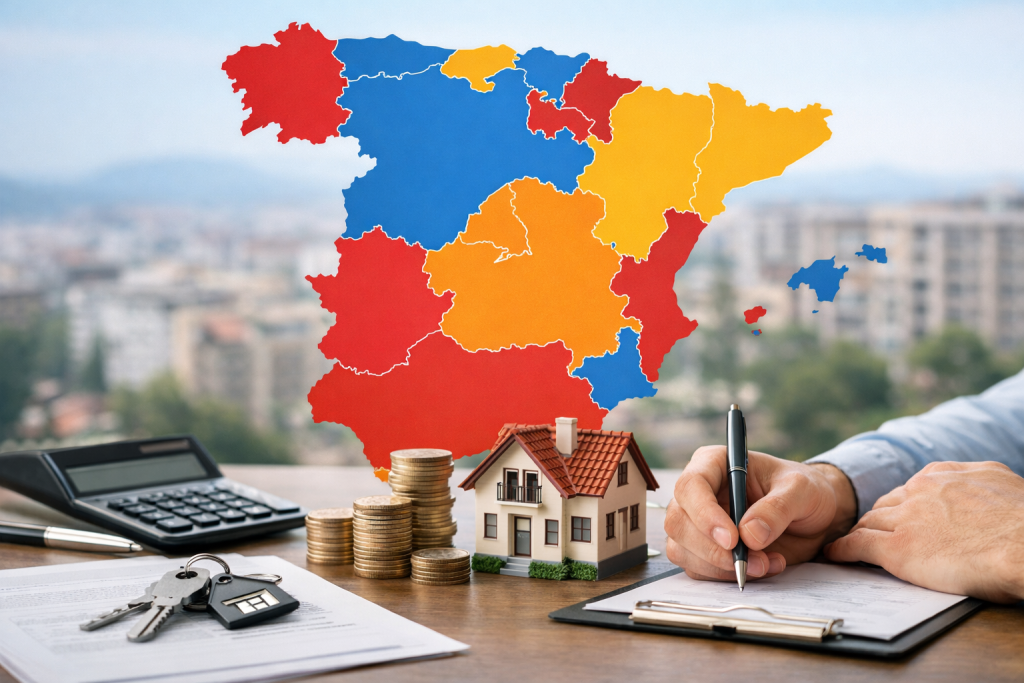
Comprar una vivienda con menos del 20 % de ahorro sigue siendo uno de los mayores retos para muchas personas en España. En los últimos años, la Administración ha puesto en marcha distintos mecanismos de aval público para facilitar el acceso a la financiación, pero no todos funcionan igual ni están disponibles en todo el territorio. Tras la prórroga del Aval ICO estatal, muchas comunidades autónomas han desarrollado —o reforzado— sus propios programas de avales hipotecarios, con condiciones, requisitos y operativas diferentes. En este artículo nos centramos exclusivamente en los avales autonómicos en 2026, explicando: ¿Qué es un aval hipotecario autonómico? Un aval hipotecario autonómico es una garantía pública ofrecida por una comunidad autónoma para ayudar a determinados compradores a acceder a una hipoteca con un nivel de financiación superior al habitual. En la práctica, estos avales permiten: A diferencia del aval ICO estatal, cada comunidad define sus propias reglas: Diferencias clave entre aval ICO y aval autonómico Aunque ambos persiguen un objetivo similar, no son lo mismo: Además: Por eso es importante entender qué existe en cada comunidad. Comunidades con avales autonómicos ACTIVOS en 2026 A fecha 21 de enero de 2026, estas son las comunidades que cuentan con programas de aval hipotecario autonómico operativos: Andalucía Programa de garantías para primera vivienda, orientado a facilitar financiación elevada. En la práctica, se está aplicando con plazos amplios y criterios adaptados al perfil joven y familiar. Comunidad de Madrid “Mi Primera Vivienda”, uno de los programas más conocidos, que permite elevar la financiación mediante garantía pública autonómica. Islas Baleares “Hipoteca Jove”, con vigencia extendida y topes actualizados, enfocada a residentes y compradores de vivienda habitual. País Vasco (Euskadi) GazteAvala / Gazte-aval, línea específica de avales para jóvenes compradores. Comunidad Valenciana Avales del IVF para primera vivienda, con convocatoria y operativa activa en 2026. Región de Murcia ICREF Aval Joven, prorrogado hasta el 31/12/2026 o hasta agotamiento de fondos. Extremadura Aval Joven Vivienda, línea autonómica de garantías para facilitar el acceso a la compra. Galicia Programa autonómico de avales para adquisición de vivienda, con convocatoria activa en 2026. Castilla y León “Mi Primera Vivienda”, extendido a la anualidad 2026. La Rioja AvaLa Rioja, programa vigente a través del IRVI. Comunidades con aval anunciado pero NO operativo aún En estas comunidades existen anuncios o declaraciones públicas, pero no una operativa clara y abierta comparable a las anteriores: Si se publican las órdenes o convocatorias oficiales, podrían incorporarse a los programas activos. Comunidades SIN aval autonómico activo ni anunciado A día de hoy, no se ha localizado evidencia oficial de programas autonómicos de aval hipotecario en: En estas comunidades, el acceso a financiación elevada depende fundamentalmente del aval estatal o de la política interna de cada entidad bancaria. ¿Se puede combinar un aval autonómico con el aval ICO? Esta es una de las preguntas más frecuentes y también una de las más complejas. En la práctica: Algunas comunidades conciben su aval como alternativa al ICO; otras como complemento potencial. No existe una regla única. Errores frecuentes al intentar usar avales autonómicos Uno de los problemas habituales es pensar que el aval: En la práctica, los errores más comunes son: Por qué el asesoramiento hipotecario es clave en estos casos Los avales autonómicos no son productos estándar. Cada operación requiere: Sin un asesoramiento especializado, es fácil perder una oportunidad real por un detalle técnico. Conclusión: los avales existen, pero no funcionan igual para todos En 2026 existen avales públicos reales para facilitar la compra de vivienda, pero: Conocer qué ofrece cada comunidad es el primer paso. Saber cómo utilizarlo correctamente, el definitivo.
Mortgage guarantees until 2027: the real opportunity to buy a home with less savings

Uno de los mayores frenos para comprar vivienda en España no es la cuota mensual de la hipoteca, sino el ahorro inicial. Ese 20 % de entrada más los gastos hace que muchas personas solventes se queden fuera del mercado. Por eso, la decisión del Gobierno de extender los avales hipotecarios hasta 2027 es una de las noticias más relevantes para quienes quieren comprar su primera vivienda. En este artículo te explico qué son estos avales, a quién van dirigidos, cómo funcionan en la práctica y qué debes tener en cuenta para utilizarlos bien y evitar errores. ¿Qué son los avales hipotecarios del Estado? Los avales hipotecarios son una garantía pública que permite a los bancos conceder hipotecas con una financiación superior a la habitual. En condiciones normales, los bancos financian hasta el 80 % del valor de compra o tasación. Con el aval del Estado, esa financiación puede llegar hasta el 100 % del precio de la vivienda. El aval lo concede el Instituto de Crédito Oficial (ICO), respaldado por el Gobierno de España.Es importante aclarar que no es un préstamo, sino una garantía que cubre el riesgo adicional que asume el banco. ¿Qué implica la ampliación del aval hasta 2027? La medida tenía inicialmente como fecha límite 2025, pero se ha ampliado hasta el 31 de diciembre de 2027. Esto supone: La ampliación responde a una realidad evidente: el acceso a la vivienda sigue siendo complicado y el programa, hasta ahora, no se estaba utilizando todo lo que se esperaba. ¿Quién puede beneficiarse del aval ICO? Aunque cada banco puede aplicar ciertos criterios propios, el perfil habitual es: Jóvenes compradores Familias con hijos a cargo El aval no está pensado para inversores ni para segundas residencias. La vivienda debe ser de uso habitual. ¿Cuánta financiación se puede conseguir? De forma orientativa: Esto permite llegar al 100 % del precio de compra, aunque los gastos asociados (impuestos, notaría, registro…) suelen ir aparte y deben tenerse en cuenta desde el inicio. El error más común: pensar que el aval garantiza la hipoteca Este punto es clave. Tener derecho al aval no significa que el banco esté obligado a conceder la hipoteca. La entidad sigue analizando: Por eso, muchas personas cumplen los requisitos del aval, pero no consiguen financiación o reciben condiciones poco favorables. ¿Cómo te puede ayudar Hipotea a aprovechar el aval ICO? Aquí es donde muchas operaciones se atascan y donde Hipotea marca la diferencia. El aval ICO abre la puerta, pero no garantiza por sí solo que la hipoteca salga adelante ni que lo haga en buenas condiciones. Cada banco interpreta el aval de forma distinta y exige una presentación muy concreta del caso. En Hipotea te ayudamos a: El objetivo no es firmar cualquier hipoteca, sino la hipoteca adecuada para tu situación personal y futura. En muchos casos, el problema no es el aval, sino cómo se estructura y se presenta la operación desde el inicio. ¿Es buen momento para comprar con aval? Depende de cada caso, pero en general puede ser una buena opción si: El aval puede ser el empujón necesario para dar el paso, siempre que la decisión se tome con criterio y planificación. Conclusión: una oportunidad que hay que saber usar La ampliación de los avales hipotecarios hasta 2027 es una muy buena noticia, pero como cualquier herramienta financiera, solo funciona bien si se utiliza correctamente. No se trata solo de llegar al 100 % de financiación, sino de firmar una hipoteca que puedas mantener con tranquilidad en el tiempo, sin sorpresas ni tensiones innecesarias. Si estás valorando comprar vivienda y no sabes si el aval ICO es para ti, un análisis previo puede marcar la diferencia entre una buena decisión y un problema a largo plazo.
65% of mortgages in Spain are already for investment: why financing is more profitable than buying outright

El mercado inmobiliario español ha cambiado de forma radical.Los últimos informes (ASUFIN, Idealista, Euribor) coinciden: el 65% de las hipotecas que se firman en España se destinan a inversión, no a vivienda habitual. Sí, dos de cada tres compradores que piden financiación no están comprando para vivir, sino para generar rentabilidad.Y este dato revela algo importante: el inversor español ha entendido que financiar es más rentable que comprar al contado. En este artículo te explico por qué. ¿Por qué el 65% de las hipotecas ya se usan para invertir? La liquidez es oro en un mercado cambiante Muchos inversores que antes compraban al contado han empezado a financiar porque: 1 El modelo “cash is king” ya no funciona igual Con precios al alza, reformas más caras y alquiler en máximos históricos, invertir todo tu capital en una sola vivienda es arriesgado y poco eficiente. La razón matemática: financiar duplica la rentabilidad No necesitas fórmulas complicadas: El doble.Y con el mismo dinero que compras una vivienda, puedes comprar dos o tres. Este es el motivo exacto por el que el comprador inversor se está moviendo a la financiación. La estrategia de inversión que está arrasando en España (y por qué tiene sentido) El patrón se repite en todo el país: Los bancos no suelen financiar reformas, pero al conservar liquidez gracias a la hipoteca, el inversor sí puede hacerlo (aunque en hipotea disponemos de fórmulas también para financiar compra + reforma). Resultado:✔️ Más rentabilidad✔️ Más patrimonio✔️ Más flujo de caja✔️ Más inmuebles Por qué el inversor profesional prefiere financiar (y por qué tú también deberías) No descapitalizarse La clave de todo inversor: mantener liquidez = mantener poder. Reducir riesgo Comprar una sola vivienda al contado te deja expuesto.Comprar varias financiadas diversifica tu riesgo. Aprovechar la amortización de capital Mientras alquilas, el inquilino paga parte de tu hipoteca cada mes.Esto aumenta tu patrimonio mientras mantienes liquidez. Multiplicar el efecto “apalancamiento” El rendimiento de tu dinero se dispara cuando usas financiación responsable. La gran pregunta: “¿Es seguro invertir financiando?” Sí, siempre que se cumpla: Los inversores que están firmando hipotecas hoy no lo hacen por necesidad, sino por estrategia. Solicita un estudio gratuito de rentabilidad En Hipotea Asesores podemos mostrarte: Nuestros estudios suelen mostrar un salto del 5–6% al 10–12% anual.¡Y son totalmente gratuitos. El inversor moderno ya no compra al contado — compra con estrategia Si el 65% de las hipotecas se firman para invertir, no es casualidad.Es porque financiar: El inversor inteligente ya está aplicando esta estrategia. La pregunta es:¿Quieres que te calculemos cuánta rentabilidad podrías estar perdiendo?
Complete guide to obtaining a 100% mortgage in Spain

Conseguir una hipoteca al 100 % es el sueño de muchos compradores con pocos ahorros. Pero entre los gastos que no se conocen, las condiciones de tasación y las exigencias bancarias, ese objetivo puede convertirse en una trampa si no se conoce bien el terreno. Esta guía reúne todos los pasos, estrategias, riesgos y realidades que un cliente debe conocer para aspirar a una financiación al 100 %, y lo explicamos con claridad para que puedas usarla. 1. Los gastos al comprar una vivienda: no son del 0 %, ni un pequeño extra Uno de los errores más comunes es pensar que si obtienes el “100 %” (precio de compra), ya no necesitas aportar nada más. Pero los gastos asociados a la compra pueden suponer entre el 8 % y hasta el 15 % del valor de la vivienda, dependiendo de múltiples factores: Por ejemplo: Conclusión: reclamar una hipoteca al 100 % de la vivienda no implica cubrir estos gastos. Todo cliente debe prever este “colchón extra” en su plan financiero. 2. Tasación vs precio de compra: la trampa del 80 % Un punto clave es justamente este: muchas entidades pueden anunciar “financiación al 100 % del precio de compra”, pero luego limitarse al 80 % de la tasación. Esto implica una contradicción real si la tasación no supera o iguala el precio de compra. Por ejemplo: Por tanto, nunca confíes en que “100 % precio compra” es garantía de que recibirás el importe total. La clave está en: Estos matices son importantes tenerlos en cuenta. 3. Avales públicos que permiten aspirar al 100 % Los avales estatales o autonómicos son una de las palancas más potentes para acceder a hipotecas al 100 %. Pero tienen límites, requisitos y excepciones como éstos: Aval ICO / MIVAU (Programa nacional) Avales autonómicos / regionales Es fundamental mirar los avales de cada comunidad: cada región puede tener su propia línea de garantía o aval para impulsar la vivienda. Algunas comunidades destacadas serían: 4. Perfiles que suelen acceder al 100 % (y cuándo solo ofrecen hasta 90 %) Para las entidades bancarias, el riesgo es alto cuando financian al 100 %. Por eso solo algunos perfiles pueden lograrlo con más facilidad: Por tanto, no basta con “ser buen cliente”: hay que cumplir criterios de ingresos, estabilidad, escasa deuda y aportar un dossier impecable para que un banco “arriesgue” al 100 %. En resumen, si no cumples alguno de los requisitos anteriores, la expectativa práctica suele ser 80–90 %, salvo estructura con aval o garantías extras. 5. Préstamos personales complementarios: una alternativa parcial Cuando las opciones anteriores no son posibles, una vía combinada puede usarse: Se puede usar como “plan B” si reúnes buenas condiciones y la entidad lo permite. 6. Pre-tasación (valor previo) es clave: no esperes al final Una de los fallos más costosos es que la operación se arruine en la fase de tasación, porque posiblemente tengas la reserva hecha y puedas perderla. Por eso: Por tanto, esa “pre–tasación” funciona como filtro de viabilidad antes de presentar la operación al banco. 7. Requisitos financieros y dossier ganador Para que la entidad vea viable conceder el 100 %, debes cuidar tu solicitud. Aquí los elementos más valorados: Presenta todo ordenado, con valores de comparables inmobiliarios, notas simples al día, certificado energético y documentación urbanística de la vivienda. 8. Tasación final y plazos legales Este tiempo es clave para revisar, comparar y rectificar detalles del contrato. 9. Qué entidades suelen ofrecer mejores condiciones (cajas o bancos) y vinculaciones 10. Riesgos y realidades: lo que no te contarán 11. Tabla resumen Estrategia / vía Qué ofrece Ventajas Limitaciones / requisitos clave Aval ICO / MIVAU Aval de 20 % (o 25 %) para elevar financiación Permite llegar al 100 % si el banco coopera Solo jóvenes/familias, entidad adherida, criterios de riesgo Avales autonómicos Garantías regionales específicas Complementa al aval ICO o sustituye Limitado a ciertas zonas, requisitos locales Doble garantía / inmueble adicional Hipotecar otro inmueble para cubrir tramo Permite alcanzar 100 % o incluso cubrir gastos Más coste, riesgo sobre segundo inmueble Préstamo personal complementario Financia la diferencia restante Combinable si el perfil lo permite Cuota adicional, TAE mayor, exigencia del banco Pre–tasación previa Evaluación previa del valor real Evita sorpresas al final Necesita asesoría externa especializada Cajas locales / regionales Condiciones más agresivas Menores tasas, condiciones más flexibles Mayor exigencia de vinculación, menos volumen Pide tu estudio gratuito Si quieres saber si tu caso podría acceder a una hipoteca al 100 % (o qué alternativa es la más realista para ti), ponte en contacto con nosotros. Te haremos un análisis personalizado sin coste y te mostraremos todas las vías disponibles para tu perfil.
Hidden factors that can make or break your mortgage

No basta con contrato fijo, ingresos, gastos y ahorros. Las entidades valoran decenas de factores más, imposibles de enumerar todos en un artículo porque cada banco aplica criterios propios y los revisa periódicamente. Desde Hipotea explicamos algunos ejemplos representativos que permiten comprender cómo detalles que parecen menores acaban marcando la diferencia entre un “sí con buenas condiciones” o un “no” inesperado. 1) El perfil: mucho más que contrato y nómina(Estos son solo ejemplos entre muchos posibles, ya que cada banco aplica criterios distintos que además cambian con el tiempo) 2) Indicadores internos de riesgo (Ejemplos de métricas internas que ilustran la complejidad del análisis, aunque no son públicas ni uniformes entre entidades) 3) El inmueble: no todo vale igual (Ejemplos que muestran cómo la vivienda en sí influye tanto como el perfil del comprador) 4) La operación: cómo se estructura también pesa (Estos ejemplos muestran cómo detalles del propio préstamo cambian radicalmente el resultado) 5) Mismo cliente, distinto resultado (Ejemplos que ilustran cómo, incluso con el mismo perfil, el desenlace varía por factores externos) 6) Errores frecuentes que generan falsas expectativas (Ejemplos comunes que vemos en el día a día, aunque no son los únicos posibles) 7) Cómo lo resolvemos en Hipotea 8) Checklist previo antes de reservar vivienda (Ejemplos de lo que conviene revisar, aunque cada caso debe analizarse de forma personalizada) 9) Preguntas frecuentes (FAQ) ¿Por qué un banco aprueba y otro no con los mismos datos?Porque cada entidad aplica modelos de riesgo propios y cambia sus criterios en función de mercado y apetito de riesgo. ¿Si cumplo el aval público me dan el 100 %?No siempre. Muchos bancos aplican filtros adicionales de perfil e ingresos. ¿Las pagas extra cuentan como ingresos?Depende de la entidad: algunas no las computan, otras sí prorrateadas. ¿Si mis padres me dan el dinero, sirve como ahorro?En muchos bancos no lo consideran válido. En otros sí, siempre que exista trazabilidad (donación o préstamo documentado). Conclusión Pedir una hipoteca no es una operación simple. Es un puzle con cientos de piezas, donde cada una puede cambiar el resultado. Los ejemplos anteriores son solo una muestra de la complejidad real que aplican los bancos en sus departamentos de riesgos. En Hipotea analizamos todas esas piezas en conjunto para dar en menos de 24 horas un estudio certero y útil, que evita falsas expectativas y asegura que tomes decisiones con información completa.
House Flipping: how buying, renovating and selling a property can become an opportunity

El sector inmobiliario no solo ofrece la posibilidad de comprar una casa para vivir en ella, también abre la puerta a quienes buscan oportunidades de inversión. Una de las tendencias que más fuerza ha tomado en los últimos años es el house flipping: comprar una vivienda a un precio atractivo, reformarla y venderla después a un valor superior. Este modelo puede generar importantes beneficios, pero también implica riesgos. Por eso, entender cómo funciona y qué necesitas antes de lanzarte es clave para no perder dinero. ¿En qué consiste exactamente el house flipping? El concepto es sencillo: se adquiere una vivienda que necesita mejoras, se invierte en reformas que aumenten su valor (cocina, baños, eficiencia energética, redistribución de espacios…) y se vende en un corto o medio plazo con una plusvalía. La clave está en elegir bien la propiedad, calcular con precisión los costes de la reforma y anticipar el precio al que se podrá vender en el mercado. Ventajas de esta estrategia Riesgos a tener en cuenta ¿Cómo financiar un proyecto de house flipping? Aquí es donde entra en juego la hipoteca. Muchos inversores recurren a financiación para poder acometer la compra y las reformas. Sin embargo, no todas las hipotecas están pensadas para este tipo de operaciones. Es fundamental contar con un producto flexible que se adapte a la duración del proyecto y que no implique costes excesivos en caso de cancelación anticipada (ya que la idea es vender en poco tiempo). El papel de un buen asesor hipotecario El éxito de una operación de house flipping no depende solo de comprar barato o reformar bien, también de financiarse de la forma adecuada. Ahí es donde un bróker hipotecario puede marcar la diferencia. En Hipotea te ayudamos a: El house flipping puede ser una oportunidad interesante de inversión, siempre que se planifique con detalle y se financie correctamente. La hipoteca adecuada puede ser el impulso que necesitas para convertir un inmueble en desuso en una inversión rentable. En Hipotea te asesoramos para que tu proyecto inmobiliario sea un éxito, con total transparencia y acompañamiento en cada paso.