Skip to content

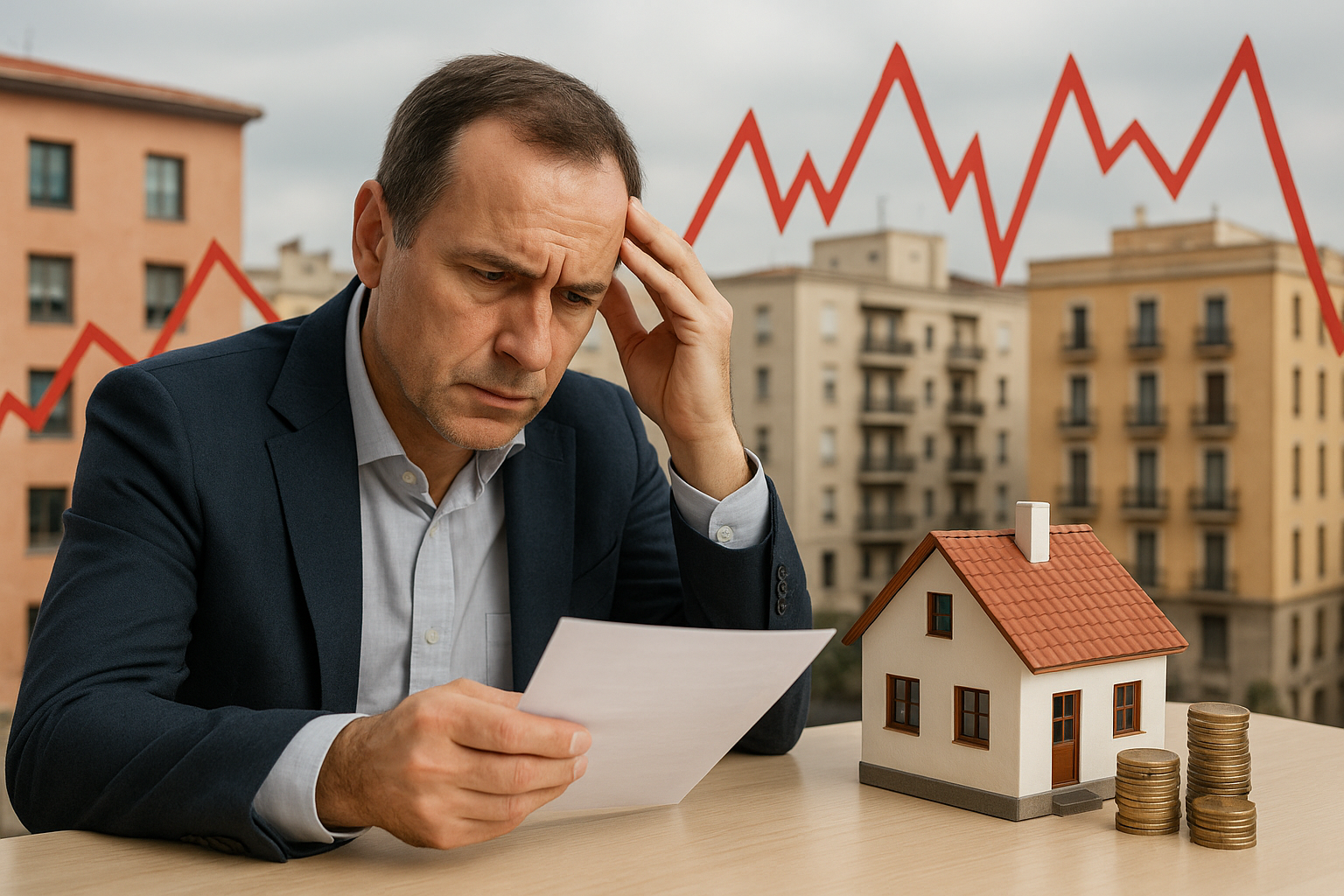
The Spanish real estate market is experiencing a moment of maximum tension. The housing prices in Spain in 2025 continue to rise strongly, exceeding in many regions the historical highs prior to the 2007 crisis. The big question is inevitable: are we facing a new real estate bubble or merely contained overvaluation?
What does it really mean that housing is “overvalued”?
Saying housing is overvalued does not mean its price is “false” or that no one is willing to pay it. The market price reflects what buyers and sellers agree on today, but bodies such as the Bank of Spain or the ECB they speak of overvaluation when that price deviates from what they consider sustainable fundamentals: household income, construction costs or rental yields. In other words, people pay those amounts because supply is scarce and demand is very strong, but it does not mean those values can be maintained over time without risk of future correction.
House prices are rising faster than family income
According to experts, the house price in 2025 could increase by around a 10 %, and in 2026 by a further 6.3 %. A clearly higher pace than the forecast growth of the households' disposable income, which exacerbates the problem of affordability for buying a home in Spain.
This gap between wages and property prices already generates tensions similar to those experienced before the great crisis, although analysts insist that the current financial context is very different.
Housing deficit: the main driver of price rises
One of the most frequently cited factors by experts is the structural housing deficit in Spain. It is estimated that shortage of supply explains almost 40 % of the price increase recorded between 2021 and 2024.
In other words, housing prices rise not because too much is built, but precisely because too little is built relative to existing demand. The lack of developable land, administrative hurdles and high construction costs aggravate this imbalance.
Bank of Spain and ECB confirm overvaluation
The main official bodies are beginning to acknowledge the problem:
- The Bank of Spain (BdE) estimates that housing was between 1.1 % and 8.5 % overvalued at the end of 2024, compared to the range of 0.8 %–4.8 % calculated just six months earlier.
- The European Central Bank (ECB) raises that figure to 10 % overvaluation, placing Spain among the European countries at highest risk of real estate tensions.
These official signals reinforce the idea that the market is not only expensive, but may be entering a phase of sustained imbalance.
Areas with greatest tension: Madrid and the Balearics lead the way
The phenomenon does not affect all regions equally. According to analysed data:
- The Balearic Islands and Madrid lead the list of areas where housing is most detached from families' purchasing power.
- Also showing high levels of tension: Navarra, Aragón, La Rioja, Valencian Community and Catalonia.
In these communities, buying a home already requires a financial effort well above the national average.
Is this comparable to the 2007 bubble?
The most frequently asked question is whether Spain is on the brink of a new housing bubble. Experts for now rule out a collapse like that experienced from 2008 to 2013 for several reasons:
- Access to credit is stricter and more controlled.
- Banks are better capitalised and supervised.
- Households and developers have stronger balance sheets.
This does not mean corrections cannot occur, but the current scenario looks more like sustained price rises than an imminent collapse.
Social and economic consequences
The overvaluation of housing in Spain has direct effects on the lives of millions of people:
- It makes buying a first home harder for young people.
- It increases rental prices, which rose by more than 10 % in 2024.
- It increases inequality, as only those with existing assets can access better opportunities.
The result is an affordability crisis that threatens to become chronic if urgent measures are not taken.
Conclusion: an expensive, tense market with risk of stagnation
The Spanish real estate market in 2025 shows clear signs of overvaluation. Although a sharp correction is not expected, the combination of housing deficit, stagnant wages and soaring prices paints a complex picture.
For thousands of families, the question is no longer just what home they can afford, but rather if they will be able to buy a house in Spain in the coming years. And here lies the great challenge: to increase the supply of affordable housing to rebalance an increasingly tense market.